Grounds for change: scaling resilient agriculture in Europe
Explore how EIT Food is scaling resilient and regenerative agriculture across Europe through farmer-led innovation, regional partnerships and investment.

When Marek Wityk wants to explain regenerative agriculture to another farmer, he does not start with carbon figures or a presentation. He takes them to the edge of a field. There, the third-generation farmer and adviser from Lower Silesia, an EIT Food landscape project in Poland- digs up two handfuls of soil: one from an undisturbed area where plants are growing, another from cultivated ground. "Farmers know good soil instinctively", he says. They recognise its smell, its texture, the way it holds together. Put the two samples next to each other and the difference becomes something they can see and feel for themselves.
That handful of soil captures something much bigger happening across European agriculture. Farmers are facing drought, excess water, rising costs, changing growing conditions and increasing uncertainty at the same time. Marek Wityk describes regenerative agriculture as a dynamic set of tools that must be tailored to the individual farm, its environment and the person managing it.
The pressure to find those new approaches is intensifying every season. Damien Jourdain, President of the EIT Food Resilient Agriculture Think & Do Tank, recalls speaking with a cereal farmer who, when he started farming around 20 years ago, expected a major climate event roughly every six years. Today, he experiences one every single year.
However, right where these challenges are greatest, Europe's fields hold one of their biggest opportunities. Healthy, living soils can underpin productive farms while dramatically improving water management, biodiversity and long-term resilience. And the proof is emerging directly from the fields.
A study supported by EIT Food and led by the European Alliance for Regenerative Agriculture examined 78 farms adopting regenerative practices across 14 European countries and more than 7,000 hectares. These farms produced almost the same amount of calories and protein as the comparison benchmark, while using 62% less synthetic nitrogen fertiliser and 76% less pesticide per hectare. (1)
A successful field, however, is just the starting point for transforming our food system. Europe now needs to move resilient agriculture from isolated successes and pilots towards transformation at scale: making it practical for farmers, measurable for businesses and policymakers, and investable for the organisations whose capital can accelerate the transition. To make a lasting impact, we need to change the system sorrounding the farm.

Grounding the transition in farm economics
The conversation around resilient agriculture easily turns into an abstract debate about carbon credits, soil metrics, or international biodiversity targets. For the person behind the tractor, however, the concerns are far more immediate: Can the farm stay solvent? Will new techniques reduce operating costs? Is there a reliable buyer for the crop? And above all, can the farm afford the financial risk of getting the transition wrong?
For the change to take root, it must make immediate economic sense and it needs to happen gradually. EIT Food's ScaleUp regenerative agriculture programme illustrates how this practical transition works on the ground. Between 2020 and 2025, more than 2,900 farmers and agronomists across 14 countries participated in its training activities, while 215 farms representing over 35,000 hectares received direct, tailored advisory support.
Of 116 farms assessed between 2023 and 2025, 98% made measurable progress in at least one farming-practice indicator, and 61% recorded direct economic improvements, with reduced input costs ranking among the most frequently documented financial benefits. (2)
The programme also revealed why scaling across regions remains complex. Transition doesn't always follow a straight line. Farmers face different challenges depending on their specific crops, local microclimates, available capital, market access and regional regulations. There is no single off-the-shelf recipe waiting to be rolled out across the continent. Scaling resilient agriculture means creating the broader economic and social conditions that allow entire farming regions to make the transition together.
Why lasting resilience requires a regional approach
Moving from individual success stories to regional progress requires systemic alignment. Resilient agriculture is one of EIT Food's three strategic priority areas, alongside protein diversification and biotechnology. It feeds directly into all EIT Food's overarching missions: healthier lives through food, a net-zero food system, and a resilient and fair food system.
This focus directly reinforces the strategic priorities gaining ground across Europe. The European Commission's AgRI 2040 and Food 2040 frameworks put strong emphasis on converting research and innovation into solutions that farmers and businesses can adopt, with priorities ranging from soil health and water management to stronger agrifood value chains and digitalisation.
EIT Food bridges this gap between innovation and widespread adoption. Through targeted programmes, EIT Food cultivates talent, trains farmers, validates emerging technologies, and relies on field-tested evidence to identify what can scale effectively. By 2035, EIT Food aims to equip 35,000 farmers with new skills, tools and technologies needed to introduce new practices, while contributing to the mitigation of 35 million tonnes of CO₂e across the food value chain.
EIT Food’s landscapes approach brings these initiatives together into a unified model. Instead of working with individual farms or through fragmented projects, a landscapes initiative convenes farmers, food companies, researchers, financial partners and local stakeholders across an entire agricultural region. Together, they establish shared goals, coordinate investment and standardise impact measurement, while farmers work with expert advisers to design transition plans tailored to their specific land and business needs.
This collaborative model directly addresses the structural burden that farmers have carried for too long: bearing the upfront operational costs and risks of new practices, while the benefits extend across the supply chain. By sharing responsibility, food companies and regional partners make the transition financially viable and sustainable for the farm.
Proven on one field, expanded across regions
In northern Spain, the Navarra 360 initiative illustrates how this regional model works in practice.
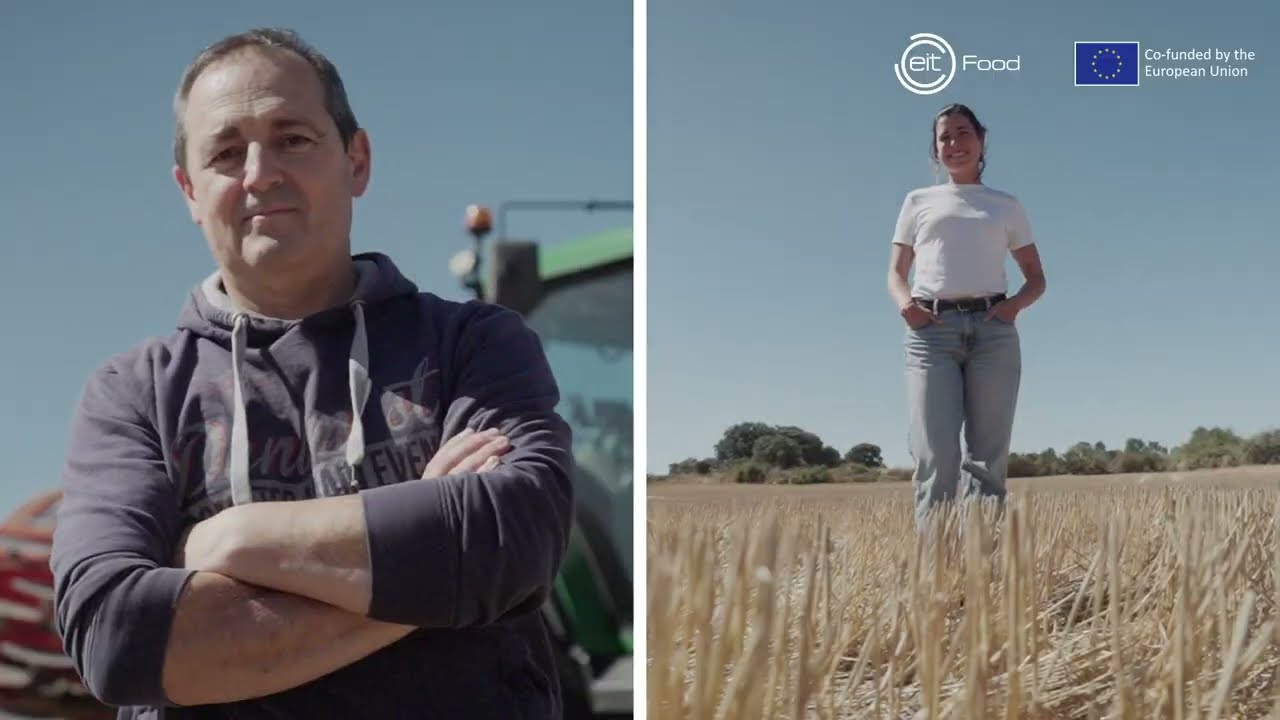
For cereal farmer Alberto Alfaro, severe droughts in 2022 and 2023 accelerated his decision to move from conventional farming towards conservation and regenerative approaches. Joining the Navarra 360 Landscape provided direct access to peer-to-peer training, technical support and a community of farmers navigating similar decisions.

I've now been practising direct drilling for two years and the results have been positive. I think that if I had been on my own, it would have been much more difficult.
The results quickly scaled beyond Alberto's fields. Navarra 360 enrolled 5,313 hectares – surpassing its original target of 3,200 hectares. Verified 2025 data showed that nitrogen use per tonne of crop feel by 47% for wheat and 45% for malting barley, while greenhouse gas emissions per tonne were reduced by approximately half. These reductions were achieved without any loss in yields, demonstrating that producing differently doesn't mean producing less. Read more.
Systemic transformation requires proving that what works in one climate and crop type can be successfully adapted across Europe through a portfolio that learns as a whole.
Navarra 360 has provided an early proof point and a methodology for EIT Food’s wider landscapes portfolio. Its approach is aligned with recognised international frameworks, and considers outcomes beyond carbon, including nitrogen, biodiversity and farm economics. The measurement models developed in Navarra are also informing Lower Silesia 360 and Serbia ReAgro landscapes. Each region adapts the approach to its own conditions, while contributing insights that can strengthen the entire portfolio.
In Poland, Lower Silesia 360 launched in 2025 with 40 farmers and 6,000 hectares, uniting farmers and cooperatives with international food and beverage companies including Bunge, Malteurop, Viking Malt, and PepsiCo. Lower Silesia builds on Navarra by integrating advanced digital soil monitoring, with data and learnings flowing back across all landscapes.
The Serbia ReAgro landscape in Vojvodina involving Nestlé and Delhaize is actively onboarding farmers with the goal of reaching 3,500 hectares by 2028 using shared measurement models.
Ivanka Stojnic, Sustainability Manager SEE at Nestlé, emphasizes why this collaborative ecosystem is vital:
Since 2021, Nestlé has been investing in regenerative agriculture with vegetable, sunflower and soybean farmers in Serbia, supporting their transition to more sustainable farming practices. Building on this foundation, the partnership with EIT Food through Serbia's first landscape initiative offers an important opportunity to attract additional investment, strengthen the broader regenerative agriculture ecosystem in the country, and scale impact, while enhancing the resilience of the agricultural supply chain.
The landscapes are not successive versions of a fixed blueprint. Navarra, Lower Silesia and Vojvodina are different in terms of soil biology, crops, climateand local market dynamics but share farmer-led transition plans, value-chain co-investment and a commitment to credible measurement. Learning moves in both directions: developments in Poland and Serbia can also inform the evolution of Navarra in Spain, making the entire landscape portfolio more effective as it grows.
Across EIT Food's broader resilient agriculture portfolio, more than 13,000 farmers have been trained, and over €50 million has been invested into field-tested agrifood solutions between 2020 and 2025. The core landscapes portfolio alone accounts for more than €30 million in value.
EIT Food's pipeline aims to engage roughly 1,500 farmers and 100,000 hectares in transition by 2028, with public and private partners co-investing to support its expansion.
EIT Food's broader resilient agriculture portfolio achievements so far
Supporting regenerative practices with field-tested innovation
Transforming farming systems is built on regenerative practices, and technology is there to support and accelerate them. To genuinely support farmers in adopting new practices, emerging agritech solutions must be tested and validated under real operational conditions.
This innovation pipeline addresses diverse operational challenges across the agricultural spectrum by applying the right instrument at each stage of the transition:

- Landscapes as scaling instruments: Value chain-led and co-financed with corporate offtakers, landscapes deliver large-scale farmer transitions with independently verified environmental and economic outcomes.
- Living labs for co-creation: The LILAS4SOILS project is testing carbon farming across five Living Labs in six European countries. Featuring 85-100 demonstration sites, the project evaluates 15 cutting-edge measurement, reporting and verification (MRV) technologies. Its 24-partner consortium brings together researchers, public authorities, industry leaders, farmering organisations to build credible, standardised soil metrics.
- At the same time, EIT Food is also exploring how demonstration (“lighthouse") farms could strengthen farmer-to-farmer learning within landscapes, helping practical knowledge remain accessible to agricultural communities over time.
- Solving operational challenges to accelerate technology adoption: Initiatives such as EIT Food's Test Farms bridge the gap between agritech innovation and implementation. By testing and validating new solutions in real farming conditions, Test Farms ensure that technology tackles real operational challenges and is robust enough for deployment at scale.
- Agtech startups in action: Innovators supported by EIT Food’s entrepreneurship programmes are tackling pressing resource bottlenecks from water management to biological inputs. For example, BeadRoots is developing biodegradable algae-based hydrogels designed to boost soil water retention, while Atfield Technologies uses real-time vineyard data to enhance climate risk management and input efficiency.
The objective is to place practical tools directly into farmers' hands, validate their performance in the field, and create reliable pathways to market adoption.
Geert Maesmans, Head of R&D at Cargill, highlights how this integrated ecosystem create value for commercial partners:

For us, EIT Food has confirmed that the areas we're shifting towards and exploring are the right ones. It has also helped us find allies, people who share the same objective but approach it differently. (...) We want to engage with startups, academic partners and customers to make sure the changes the food system needs can scale and reach the market, so they can have an impact on farms and farmers, soil health, and the nutrition and health of consumers.

Human capital as essential infrastructure
Even the best technology and financial models will fail without skilled people to drive them. Long-term agricultural resilience depends entirely on human capital, ensuring the next generation of farmers feel confident, supported, and equipped to adopt modern management practices.
Through the Resilient Agriculture Academy, EIT Food embeds practical skills development across its entire portfolio, having already reached over 13,000 farmers and advisors. The Academy targets the specific hurdles farmers face at different stages of their careers, equipping them with the knowledge needed to support adoption and scaling.
Unlocking peer-to-peer learning: Through the GROW initiative, over 11,000 participants across 141 hands-on workshops, farm walks, and digital courses are sharing knowledge farmer-to-farmer, closing the gap between academic research and practical fieldwork.
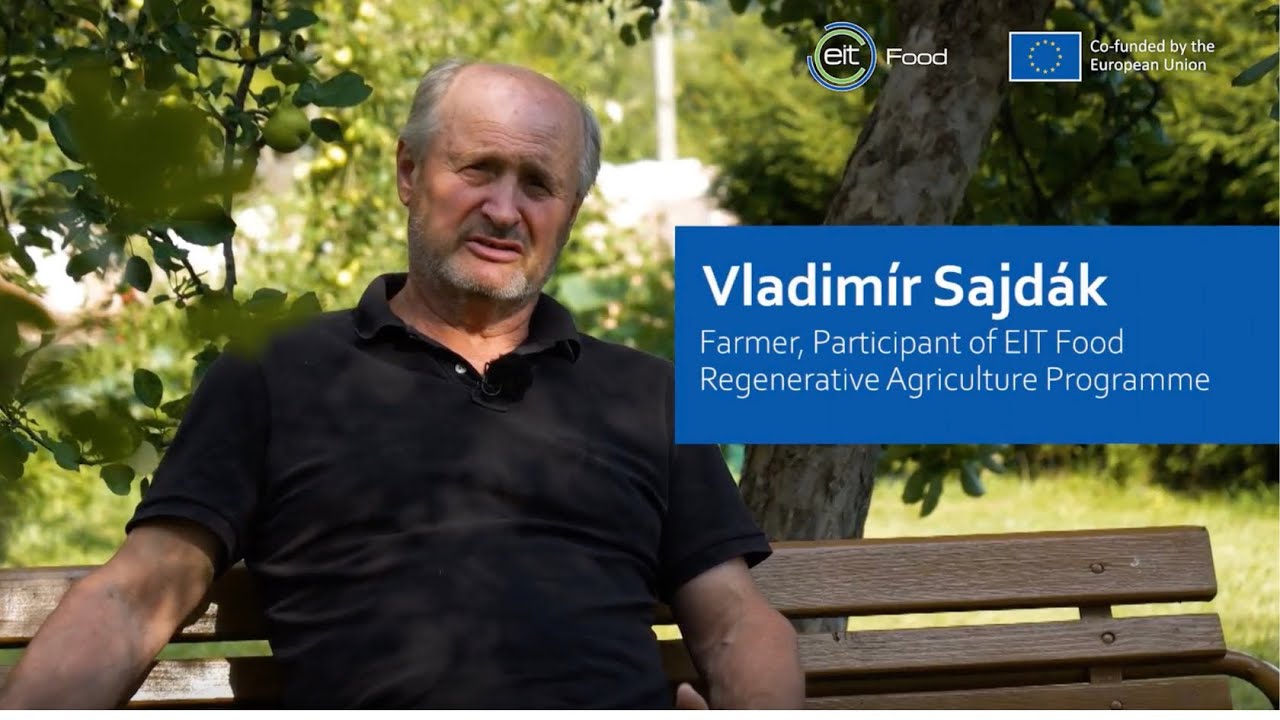
Building profitable carbon businesses: Through C-Farming, farmers, advisors, and educators gain the agronomic, digital, and financial skills needed to turn carbon farming from a complex concept into a viable, profitable business model.
Ensuring generational renewal: The Future Harvest programme addresses generational renewal across European agriculture. In 2026, the initiative will support 900 young farmers in five countries in partnership with the PepsiCo Foundation, helping them build viable, climate-resilient farming businesses.
Working with EIT Food on projects like Future Harvest and Lower Silesia 360° has been a truly rewarding experience for us at Ground Up. These are ambitious and demanding projects, but let’s face it, breaking new ground, testing new ideas and making real change happen rarely comes without a few bumps along the way. That’s why we’re genuinely happy and proud to be part of this journey, helping shape a more regenerative agricultural landscape and drive the systemic changes our agri-food sector so urgently needs.
When farmers get the right training, tools, funding, and market opportunities all at once, switching to sustainable practices becomes a smart, safe step instead of an operational risk.

Sharing risk to make resilience investable
Even when farmers have the knowledge and technologies they need, a key question remains: who carries the cost and risk of changing the system? In the early years of a transition, the financial risk sits almost entirely on the farmer's balance sheet, even though the long-term benefits flow down the entire supply chain. Expecting farmers to bear the cost of creating shared public value is neither fair nor sustainable.
That is why EIT Food’s regional landscapes are built on co-financed funding models, blending public innovation capital with private corporate investment. The aim is to couple long-term value-chain commitments with shared measurement, reporting and verification (MRV) so that transition outcomes become credible to farmers, businesses and financial institutions, and open the door to investments.
This connected structure creates clear opportunities across the food system:
- Food companies and retailers: Co-invest in landscapes and provide longer-term sourcing commitments.
- Financial institutions and investors: Access standardised risk-sharing instruments that make sustainable agricultural transitions a viable asset.
- Innovators and researchers: Test and validate emerging technologies in real commercial conditions with direct routes to market.
- Public authorities: Use verified field data to inform targeted agricultural policy and direct public funds effectively.
Connecting on-farm data to European policy
Insights gathered directly from fields and landscapes serve a larger purpose: guiding practical policy reform. The Resilient Agriculture Think & Do Tank provides a vital link between everyday farm realities and broader regulatory frameworks.
By bringing agronomic expertise, corporate leadership, and policy insights together, the Think & Do Tank identifies operational barriers, shapes intervention strategies, and connects on-the-ground learnings directly with EIT Food's innovation, education, and landscape initiatives.
As Stéphane Durand explains, the Think & Do Tank focuses on connecting three main areas: EU policy, knowledge, and funding so that farmers get the support they need to make changes on the ground.
Ground-level evidence also includes understanding market demand. Research from the EIT Food Consumer Observatory highlights a critical insight: while European consumers overwhelmingly agree that agricultural resilience matters for society, terms such as "resilient" or "regenerative" farming rarely influence their daily purchase decisions. Instead, consumers respond far more strongly to tangible benefits such as taste, freshness, local origin, and health.
The research also shows that farmers are among the most trusted voices when communicating about agricultural practices. (3)
Combining field data with consumer insights ensures that policies and supply chains don’t just focus on production, but actively help market sustainable food in a way that truly rewards farmers.
This integrated approach creates a continuous feedback loop that drives systemic change:
- Farm experience identifies the problem
- Skills and innovation provide options
- Real farms test them
- Landscapes create the conditions for wider adoption
- Shared data builds evidence
- Evidence builds credibility and investors' confidence
- Investment helps scale
- Outcomes from the ground informs policy and market alignment


A system built for the future
Back in Poland, Marek Wityk knows that holding two handfuls of living soil is only the first step in a much longer journey.
Transforming an entire agricultural region requires more than convincing individual farmers to try a new practice. It takes food companies willing to invest in resilient supply chains, innovators capable of turning research into practical tools, financial partners ready to share transition risk, policymakers who value field-tested data, and consumers who recognise the true worth of sustainable food.
As a trusted convener backed by the European Union and fully aligned with the ambitions of the EU Mission "A Soil Deal for Europe", EIT Food brings these crucial pieces together, connecting local field transformations with the cross-border partnerships, technologies, and capital required to achieve scale across the continent. By combining farmer education, on-farm testing, harmonised and robust metrics, transition finance, and regional landscape initiatives, EIT Food delivers an integrated system designed for lasting impact.
Farming in Europe can also mean healthier soils, more profitable farms, secure food supply chains, and an agricultural system built to withstand climate and market pressures.
With strong partners working together across Europe, we can transform these regional success stories into an agricultural system built to last.
EIT Food Partners Contributing to the Resilient Agriculture Think & Do Tank
Be part of the change
References
- European Alliance for Regenerative Agriculture (EARA), Farmer-led Research on Europe’s Full Productivity report, 2025
- EIT Food, Scale-Up Impact report 2020-2025
- EIT Food Consumer Observatory, Making Agriculture Matter: Toward consumer-centric positioning of resilient and regenerative agriculture, 2026
More Deep Dives

Why women-led innovation must scale

