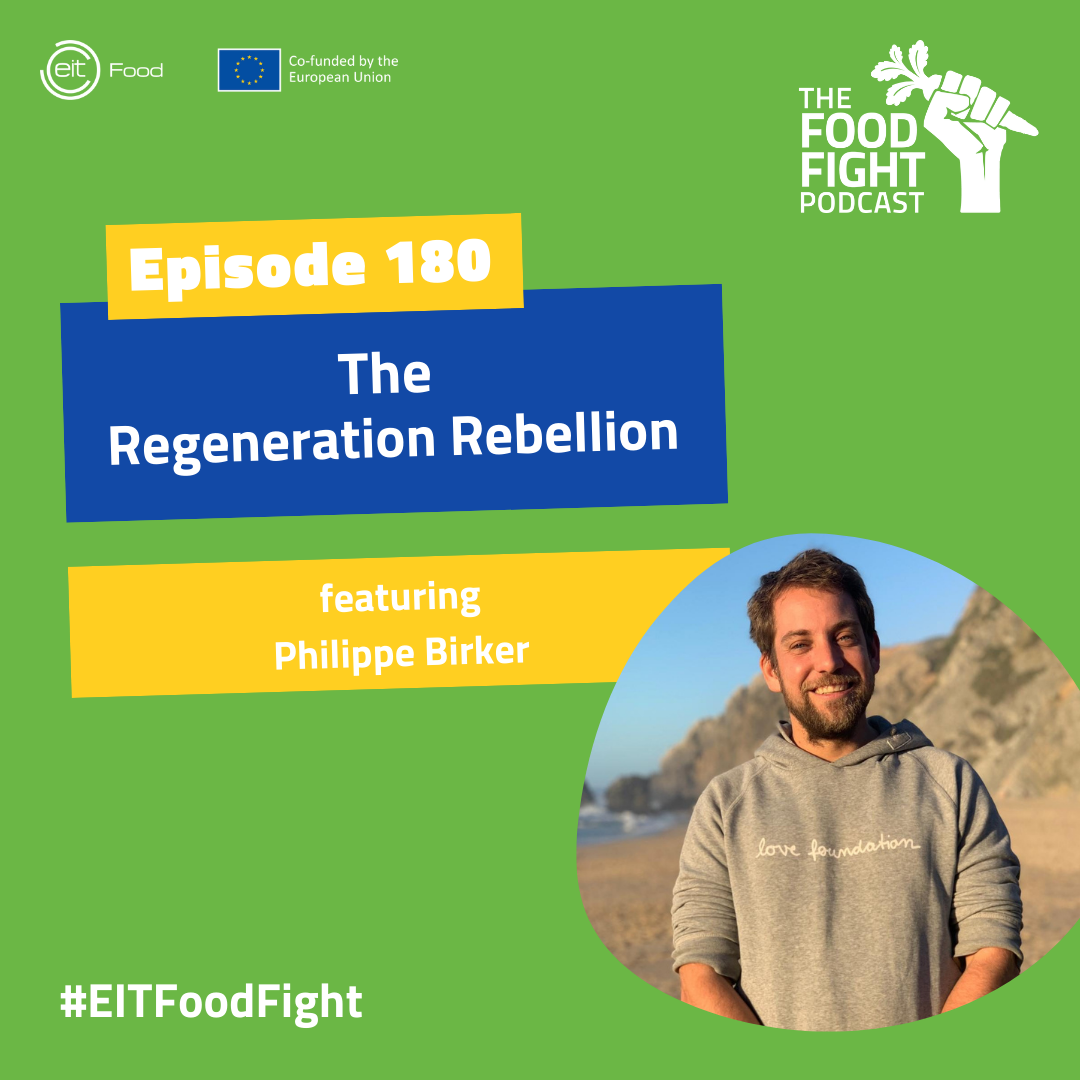
The Regeneration Rebellion
Co-Founder of Climate Farmers, Philippe Birker grew up around farming, built startups in Berlin and Amsterdam, ran a techno club, then bought an abandoned village in Portugal and fell in love with soil. What he found next changed everything.
Synopsis
Can regenerative agriculture transform the food system while giving farmers a fairer and more secure future?
In this episode, Philippe Birker, co-founder of Climate Farmers, explains why regeneration is about more than adopting individual farming practices. It requires a system that rewards farmers for improving soil, biodiversity and resilience while enabling them to earn a sustainable living.
Philippe traces Climate Farmers’ development from a small online community connecting isolated regenerative farmers to a wider learning and support ecosystem. Its work now covers farmer education, research, measurement, finance and collaboration across the agrifood system.
The episode also examines the barriers holding back the transition, including unsuitable financial incentives, limited access to education and a disconnect between research and farming realities. Philippe argues that meaningful progress must be farmer-led and supported by policymakers, universities, businesses, financial institutions and consumers.
Key takeaways
Regeneration works with nature.
Regenerative agriculture responds to the conditions of each farm, using natural processes to strengthen soil, biodiversity and food production.
Farmers must be at the centre of change.
Farmers carry much of the work and risk within the food system, but often receive too little financial reward or recognition.
Community helps farmers make the transition.
Climate Farmers began by connecting practitioners who were experimenting with regenerative approaches but lacked local support and opportunities to share knowledge.
Education remains a major barrier.
Many agricultural students still have limited opportunities to study regenerative agriculture. Climate Farmers is developing a master’s programme with European universities to help address this gap.
Research must reflect farming realities.
Bringing farmers into research projects can ensure that studies respond to practical needs while generating evidence to inform policy and investment.
Farmers should be rewarded for wider benefits.
Improved biodiversity, carbon storage and water retention provide value to society, but farmers are not consistently paid for delivering these outcomes.
Systemic change requires collaboration.
Farmers, researchers, businesses, banks, insurers, policymakers and environmental organisations must work together to change how food is produced, financed and valued.
Listen to the latest Food Fight episodes

AI Eyes On Old Tractors: Can PerPlant Give Farmer Their 25 Good Seasons?

Smart Traps Billion Dollar Bugs, and the Farmer Fighting Back
