Why What You Eat Matters: London Climate Action Week
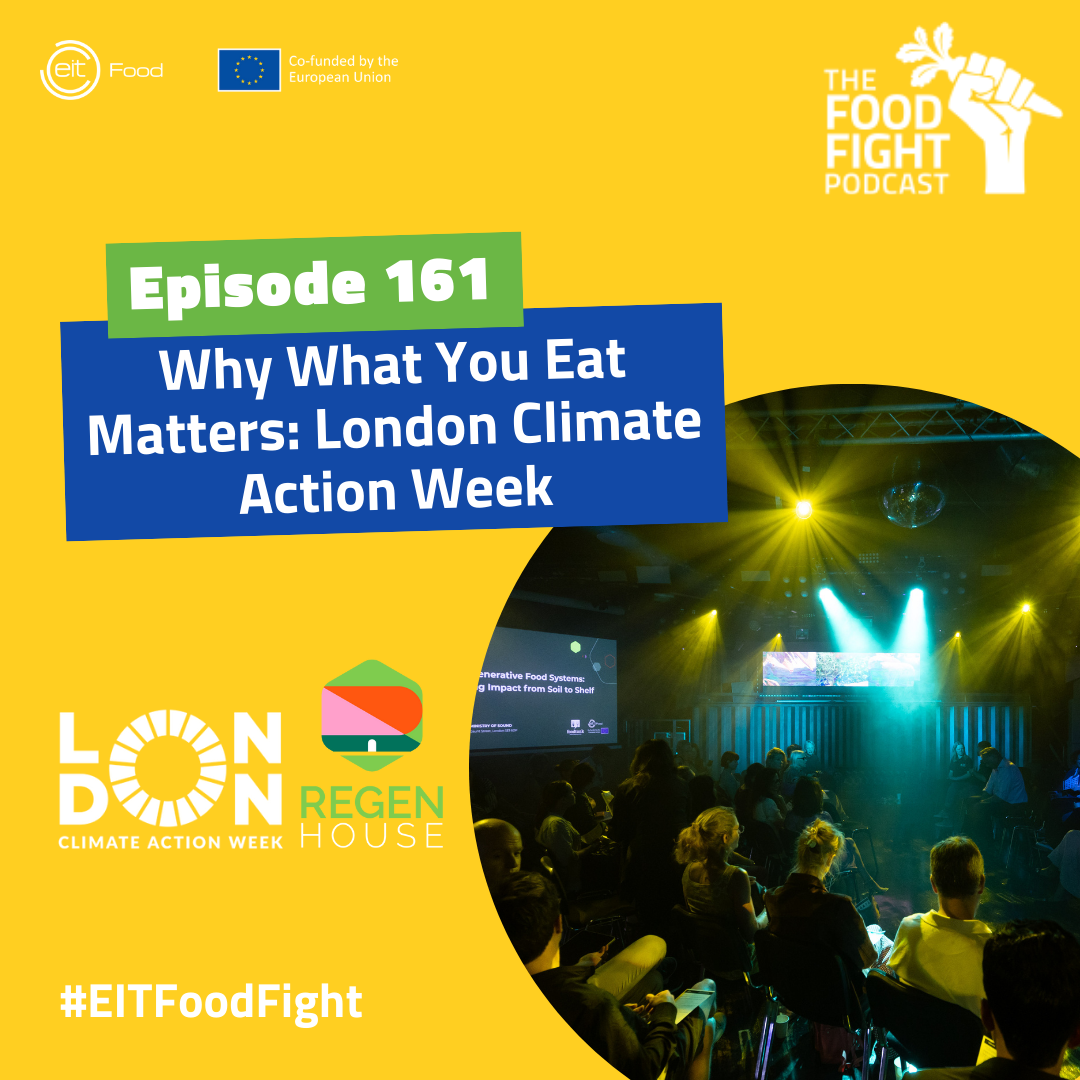
In this second episode from London Climate Action Week, we move from diagnosing the crisis to spotlighting the solutions. Host Matt Eastland explores real-world actions already reshaping how we grow, buy and eat food... from local farms and policy rooms to kitchens, supply chains, and supermarket fridges.
Synopsis
Key Themes & Takeaways
Change is already happening
Farmers are testing new methods. Innovators are scaling solutions. Investors and policymakers are starting to listen. People who have worked in this space for decades say they’re seeing signs of progress.
Events like REGEN House bring people together, which helps fight burnout and creates space for collective action.
Farmers and producers need to lead
The people growing, raising, and catching food have practical experience and ideas that matter. Their knowledge is finally starting to show up in the right rooms, but they still don’t have enough say in how the system evolves.
Supporting them means means funding their work and shifting power. Listening needs to be followed by action.
Investment is beginning to shift
Ag-tech, blue tech, and traceability tools are getting attention. Some governments are starting to recognise that data and transparency are essential if we want real accountability.
What needs to happen now is making sure that investment doesn’t just go to big tech or marketing campaigns. The people working closest to the land need access to those resources too.
Food has value beyond price
Good food builds health, education, connection, and local economies. We need to stop treating food as a commodity and start recognising the wider benefits it brings.
This starts by making sure farmers receive a fairer share of the value chain and that consumers understand what they’re paying for.
Our eating habits shape the system
In the UK, food culture is often fast and disconnected. Meals are rushed, eaten alone, or treated as something to get out of the way.
Shifting how we eat, even slightly, helps change the way we think about food. Slowing down, eating whole foods, and sitting together matters more than we think.
Growing food changes how we see food
Growing even a small amount of food changes how we relate to what’s on our plate. Whether it’s a lettuce on the windowsill or a raised bed in the garden, the act of growing helps build empathy and awareness.
It also gives us a sense of agency. We see the effort and care involved, and we waste less.
Small actions are still powerful
Adjusting your fridge temperature. Learning to use the whole vegetable. Choosing something new at the shop. These changes are accessible and build momentum over time.
Individual steps don’t replace the need for system change, but they do help shift demand, habits, and values. They show others what’s possible.
Practical Actions for Listeners
Whether you’re a policymaker, producer, chef, startup founder or citizen, here are five grounded actions you can take based on this episode:
Map the Web, Not the Line: Visualise the food system you’re part of as a web. Who are the overlooked nodes?
Source Like It Matters: Connect with local or regenerative producers. Even one supplier switch can ripple.
Fund What’s Hard: Support initiatives that aren’t “sexy” but critical things like soil labs, farmer cooperatives, local food councils.
Translate Tech to the Field: If working in agtech, test solutions in real conditions. Co-create with farmers, don’t just sell to them.
Widen the Table: If your event, org, or policy circle looks and sounds the same you have to change the invite list.
Big Questions to Ponder
- How do we avoid reinforcing a food system that only serves the privileged?
- Can we create digital infrastructure that supports traceability and equity?
- Are we innovating away from resilience, or toward it?
- What would it look like to build a food system based on love, not leverage?
Featured Voices
- Richard Zaltzman, CEO, EIT Food
- Andrea Falcone, Institute of Indigenous Knowledge
- Fabio Volkmann, Climate Farmers
- Tom Hunt, Eco-Chef and Food Activist
- Simon Partridge, Bezos Centre for Sustainable Protein
- Dr. Christian Reynolds, Centre for Food Policy, City University
- Tom Pearson, Regenerative Farmer
- Amy Chappell, Livestock Farmer
- Mark Kaplan, WholeChain
Listen to the latest Food Fight episodes

The Regeneration Rebellion

AI Eyes On Old Tractors: Can PerPlant Give Farmer Their 25 Good Seasons?
