What If This Is the Moment: Systems, Strategy, and Showing Up
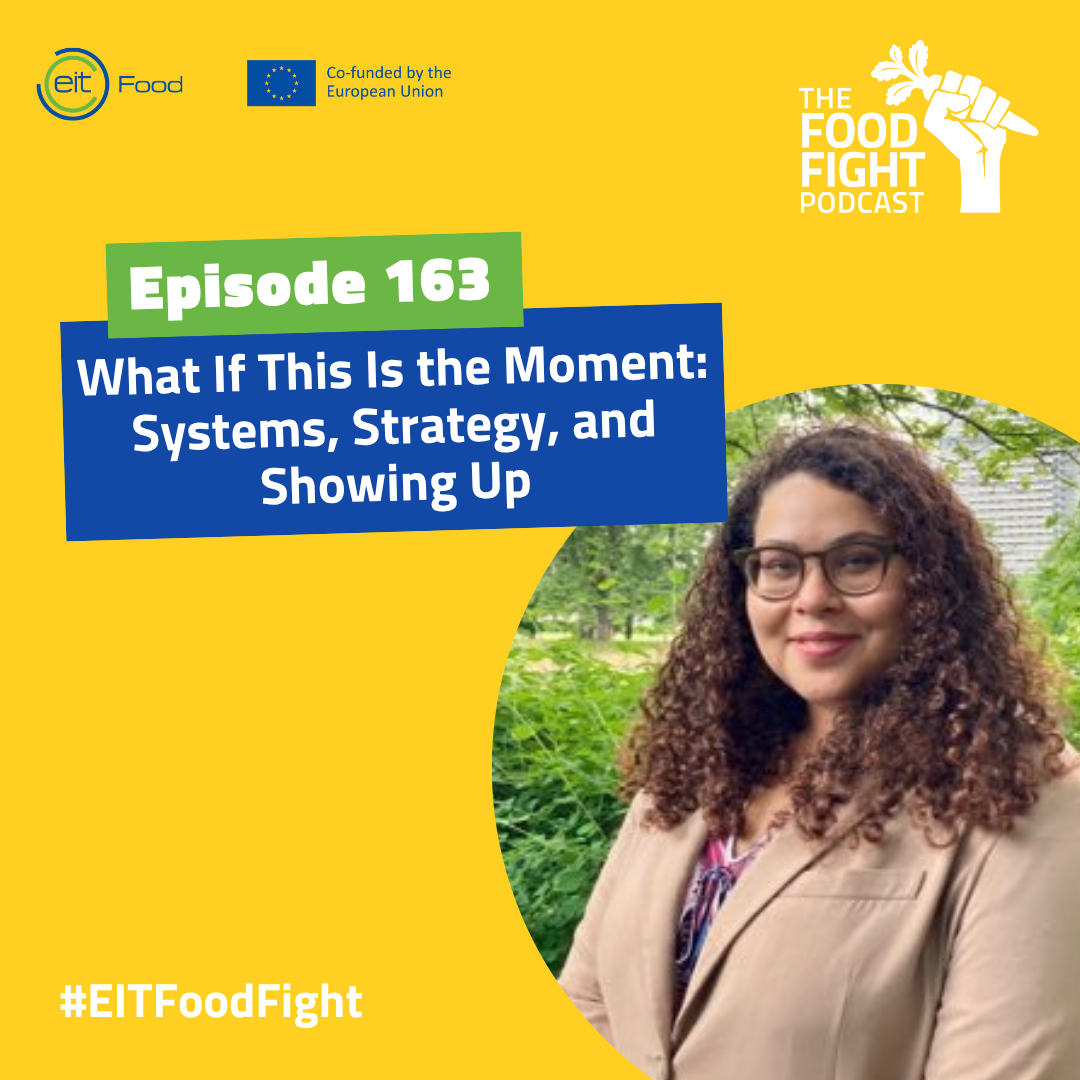
She was just named one of the top agri-food pioneers to watch, and she’s got a seat at every table that matters. EIT Food's Glindys Virginia Luciano joins The Food Fight Podcast to talk policy, power, and the future of food. What does real collaboration look like in the world we live in?
Synopsis
This week, we’re spotlighting one of EIT Food’s own: Glindys Virginia Luciano, International & Strategic Relations Project Manager and a rising force in global food systems. From starting her policy journey at 14 to shaping UN climate conversations today, Glindys breaks down what it takes to co-create a just, net-zero, and resilient food system, and why we can’t afford to treat communities as “beneficiaries” instead of partners.
She dives into what it really means to bring women, young people, and frontline communities into the room, the uncomfortable truths behind policy paralysis, and the quiet power of being intentional. We also hear her take on COP30 in the Amazon, why healthy diets are political, and why now is a moment not of collapse but of reinvention.
Key Takeaways:
Representation is Not the Same as Power
“We’ve done a lot to actually get a seat at the table… but now that they have a seat, are they really considered partners?”
While global policy forums like COP are increasingly inclusive, Glindys makes a clear distinction: visibility ≠ agency. Farmers, women, and youth may be in the room, but they’re still too often seen as recipients rather than co-creators. The work now is shifting the narrative from charity to collaboration, from tokenism to transformation.
Narratives Shape Outcomes
The way we frame participants matters. Glindys pushes back against the assumption that youth or frontline communities are “in need of help.” Instead, many are leading startups, piloting solutions, and shaping policy on the ground. What’s missing is not capability, it's scale, funding, and recognition.
Finance Remains a Critical Barrier
Lack of access to capital continues to limit the ability of women, youth, and smallholders to scale proven solutions. Investment isn’t just about growth, but about legitimacy. The current system still privileges established players over those with lived experience and local knowledge.
Glindys advocates for intentional investment and calls out the need to embed equity into funding criteria, not just programmatically, but structurally.
COP Isn’t Perfect But It’s Still Necessary
“Of course we can be critical of the process — and in fact we should be — but we also have to show up.”
With COP30 approaching in the Amazon, Glindys makes a compelling case for participation. Yes, progress is slow. Yes, the Paris targets remain unmet. But global summits are the only space where food, climate, biodiversity, and justice intersect at scale. They offer a platform for underrepresented voices and a pressure point for systemic change.
The Food System Is a Web, Not a Chain
Food systems are more complex than linear value chains suggest. They’re deeply interconnected webs of culture, climate, health, economics, and equity. Resilience can’t be achieved through tech alone. It requires incorporating local knowledge, cultural context, and social dynamics.
Without these pieces, we end up with policy blind spots and fragile systems that break under pressure.
Adaptability Is a Form of Resistance
In a world of increasing geopolitical tension, climate crisis, economic volatility, adaptability isn’t optional. Our current moment is a crucible for transformation, not collapse.
“Scarcity is the mother of invention,” Glindys says, urging the food systems community to treat instability as an opportunity to rethink what resilience really means, and who gets to define it.
Healthy Food Isn’t Just About Choice
“It’s not just about what people want, it’s about what’s available and what’s affordable.”
Lets challenge the idea that healthy eating is purely a personal decision. Accessibility, price, infrastructure, and education all shape consumer options, especially in underserved communities. We need smarter policy, clearer awareness campaigns, and partnerships across sectors, including health, nutrition, and food justice.
Intentional Collaboration is the Way Forward
Whether it’s amplifying underrepresented voices or reshaping food systems at COP, intentionality is the throughline in Glindys’s work. She’s not interested in vague coalitions or one-off events. What she advocates for are purposeful partnerships, built on equity, trust, and shared mission.
Or, as Matt puts it: when you get the right people in the room, that’s where the magic happens!
Listen to the latest Food Fight episodes

The Regeneration Rebellion

AI Eyes On Old Tractors: Can PerPlant Give Farmer Their 25 Good Seasons?
