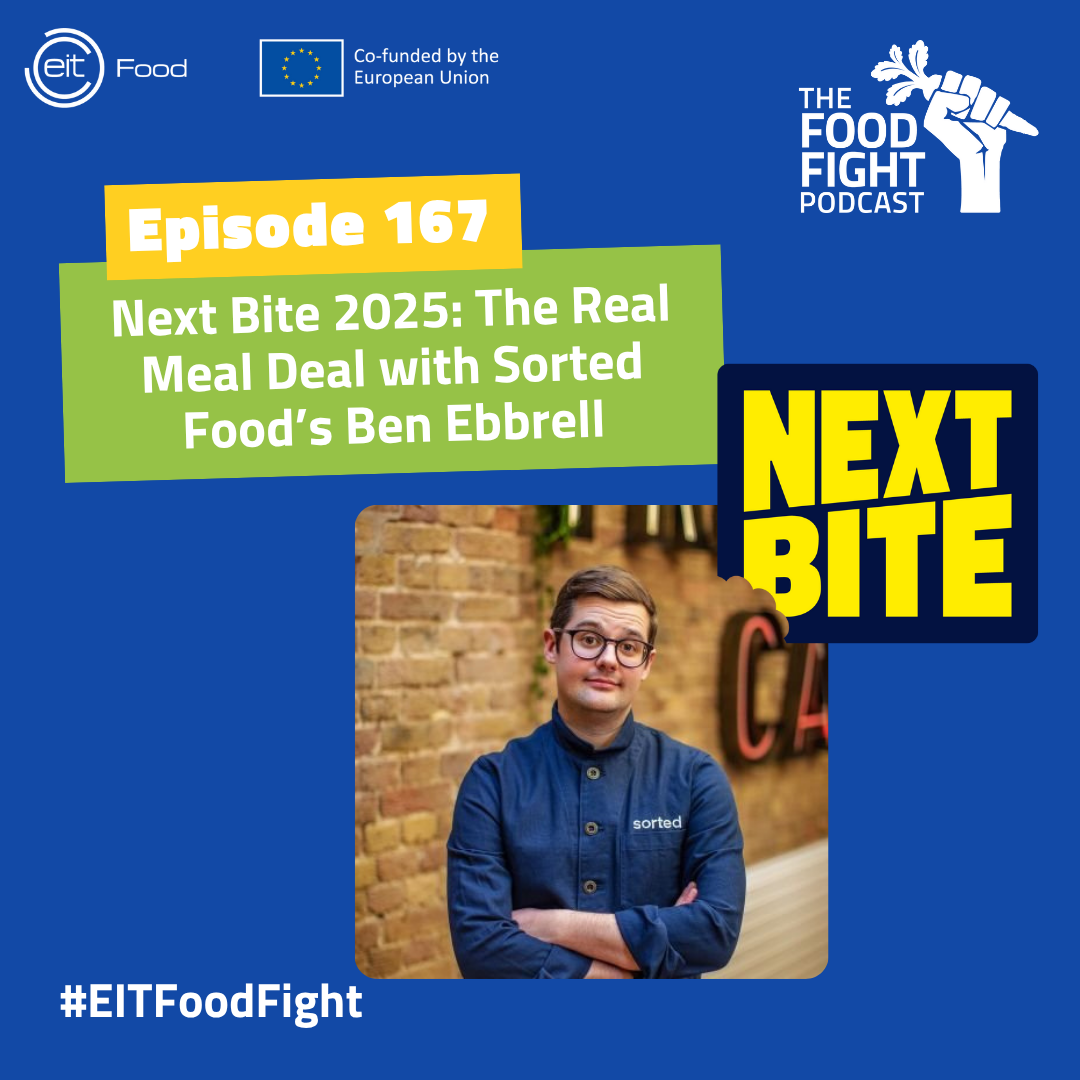
Next Bite 2025: The Real Meal Deal with Sorted Food’s Ben Ebbrell
Ben Ebbrell is back on the podcast for his third appearance, this time live from Next Bite 2025. As the co-founder of Sorted Food, he’s spent the last fifteen years building one of the world’s most trusted online food communities. But in this conversation, he goes deeper than viral recipes and kitchen hacks. We talk about the foundations of trust, the pressure to stay relevant, and why consumer voices should shape the future of food.
Synopsis
Ben Ebbrell is no stranger to the Food Fight Podcast, but this is the first time we’ve sat down with him at Next Bite. In this episode, he talks about what it really takes to keep a food platform going strong for over 15 years. From building Sorted Food with friends straight out of uni to creating tools that help people feel more confident in the kitchen, Ben has always focused on making food feel accessible and enjoyable.
We talk the early days of Sorted, and how the spirit of four friends, one camera, and a mission to make cooking feel less intimidating still shapes the work today. Ben shares how the team balances creative freedom with listening to their community, and why that feedback loop is more important now than ever. He opens up about the shift from being “content creators” to “system participants,” and what that means when you’re trying to influence food behaviours at scale without becoming disconnected from your audience.
There’s insight here for brands, startups, educators, and anyone working in food. Ben doesn’t pretend to have all the answers, but he’s clear on one thing: if we want to build a better food future, it starts with asking real people what they need, and then showing up consistently with tools, recipes, and stories that actually help.
Next Bite is built on many of the same values Ben champions: listening first, creating with purpose, and meeting people where they are. It’s about opening space for honest conversation, testing ideas in the real world, and bringing together people who care enough to try something different. From global partnerships to grassroots projects, what matters is building momentum that actually sticks. This episode is a reminder that lasting change in food doesn’t come from one-off campaigns or flashy tech, but from trust, community, the ability to listen, and the importance of always staying curious.
Key Takeaways
1. You don’t need to be an expert to start a food movement
Sorted Food began with a group of university friends who just wanted to make cooking easier and more fun. They didn’t overthink it. That beginner’s mindset helped them connect with an audience that felt underserved by traditional food media. Ben reminds us that credibility comes from consistency, honesty and shared experience.
2. Trust is built slowly, lost quickly, and never guaranteed
Ben talks about how Sorted’s audience has grown up with them, and how that long-term relationship comes with responsibility. People trust the platform not because it always gets things right, but because it admits when it doesn’t. In an age of hype and misinformation, steady, honest communication still matters more than viral moments.
3. Feedback has to be a founding strategy for growth
Sorted’s most successful ideas come directly from their audience. From cookbook themes to recipe challenges, the best content is co-created. Ben frames feedback not as a bonus, but as a core part of the work. Whether you’re building tech or running a campaign, you’re only relevant if you’re in conversation with the people you serve.
4. You can be a creator and a change-maker
There’s often a false divide between people who “make content” and those working in food policy, education, or innovation. Ben pushes back on that. Sorted’s reach gives them a chance to influence how people shop, cook and eat. They take that seriously, and increasingly see themselves as part of the food system, not just observers of it.
5. Progress is practical, not perfect
Ben is refreshingly open about the messiness of trying to make change. Sorted doesn’t chase perfection — they aim to make things 1% better for their audience, week by week. That approach has allowed them to experiment without losing their community’s trust. It’s a model for anyone looking to build momentum without burning out or selling out.
6. The food system needs translators
One of Ben’s most valuable insights is that the people working deep inside the food system - scientists, policymakers, entrepreneurs - often struggle to explain their work to the public. Sorted acts as a bridge, taking complex topics and turning them into accessible, engaging stories. That kind of translation work is critical if we want real change to reach real people.
Listen to the latest Food Fight episodes

The Regeneration Rebellion

AI Eyes On Old Tractors: Can PerPlant Give Farmer Their 25 Good Seasons?
