Constellr's solution from outer space: a satellite data help farmers manage water
With agriculture accounting for the majority of global freshwater use, Constellr is giving farmers a new way to see when crops need water and when they do not.
Image credit: SpaceX

Houston, we have an irrigation problem
Water is becoming one of agriculture’s most tightly constrained resources. In many farming regions, access is no longer guaranteed, costs are rising, and every irrigation decision carries more risk than it did a decade ago.
Most farmers still have limited visibility into how much water crops actually need, or when stress begins to set in. Food security is no longer only about yields, but whether farmers can make the right decisions early enough to avoid failure.
Yet many irrigation decisions are still made with limited visibility of what crops are actually experiencing in the field.

Lost in space, low on water
Agriculture accounts for around 70% of global freshwater withdrawals, but water is often applied based on fixed schedules, historical averages, or indirect indicators rather than real-time crop conditions. This creates systemic risk. Over-irrigation wastes water and energy. Under-irrigation increases heat stress, reduces yields, and can push crops past recovery thresholds. [1]
As climate volatility increases, this lack of precision becomes a food security issue. Farmers need earlier, field-level insight into crop stress to manage scarce water resources more effectively and protect production before losses occur.
Founded in 2020, Constellr set about addressing the visibility gap by using thermal infrared sensors on microsatellites to measure land surface temperature, a proven indicator of crop water stress.
By detecting stress before it becomes visible, Constellr enables farmers, agribusinesses, and water managers to make informed, time sensitive decisions
One small scan for satellites, one giant leap for farming
The result is the HeatR platform, which turns thermal satellite data into early signals of crop water stress. Instead of waiting for leaves to wilt or yields to drop, farmers and advisors can see stress building days or even weeks earlier, and act while there is still time to protect the crop.
In practice, this approach has delivered up to 40 percent reductions in water use where the technology is applied, simply by matching irrigation more closely to what crops actually need. Less guesswork means less wasted water, lower energy use, and fewer stress-related yield losses.[2]
With support from EIT Food’s Accelerator Network and a substantial boost from the EIT Food Startup Impact Fund, Constellr was able to refine its technology and roll out an expanded network of satellites. By developing its own satellite constellation, Constellr aims to achieve new precision in water monitoring, helping farmers avoid costly water losses. In May 2024, Constellr signed a contract with the European Space Agency to co-finance the launch of their second satellite.[3]
Having tested its technology on the International Space Station, Constellr launched its first thermal infrared monitoring satellite ‘Sky Bee-1’ in January 2025 on a SpaceX Falcon 9 rocket. They launched a second satellite SkyBee-2 in June 2025, another step towards Constellr’s planned High-precision Versatile Ecosphere (HiVE) constellation, which will contain up to 30 satellites by 2030.[4]
Making every drop count
For farmers, earlier insight into water stress means fewer surprises. Crops are less likely to cross the point of no return during heatwaves, and irrigation can be prioritised when water is scarce. That stability matters, especially in regions where drought is becoming the norm rather than the exception.
Environmentally, using less water has a ripple effect. Reduced extraction eases pressure on rivers and aquifers, while lower pumping requirements cut energy use and emissions. In water-stressed catchments, even modest efficiency gains can make a meaningful difference for ecosystems and communities that depend on the same resources.
There is also a clear economic upside. Avoiding over-irrigation saves energy and labour, while protecting yields improves income predictability. Over time, that predictability strengthens farm businesses and reduces volatility across supply chains.
Looking ahead, the company estimates that, at scale, its technology could enable the equivalent of 60 billion tonnes of water savings, avoid 14 megatonnes of CO₂ emissions, and deliver billions of euros in benefits to farmers over five years. [5]
Over 5 years Constellr’s technology will enable the equivalent of
Mission support, earthside
As part of the EIT Food Accelerator Network, Constellr was selected to be part of the EIT Food Accelerator Network 2021 cohort, and later received support through the EIT Food Startup Impact Fund, which provides direct funding to a select number of high-performing agrifood companies, whose innovation activities are contributing to making the global food system more sustainable, healthy, and trusted.
Constellr sits at the intersection of space technology and agriculture, two sectors that do not always speak the same language, so being a part of the EIT Food Community went a long way in bridging some of those gaps.
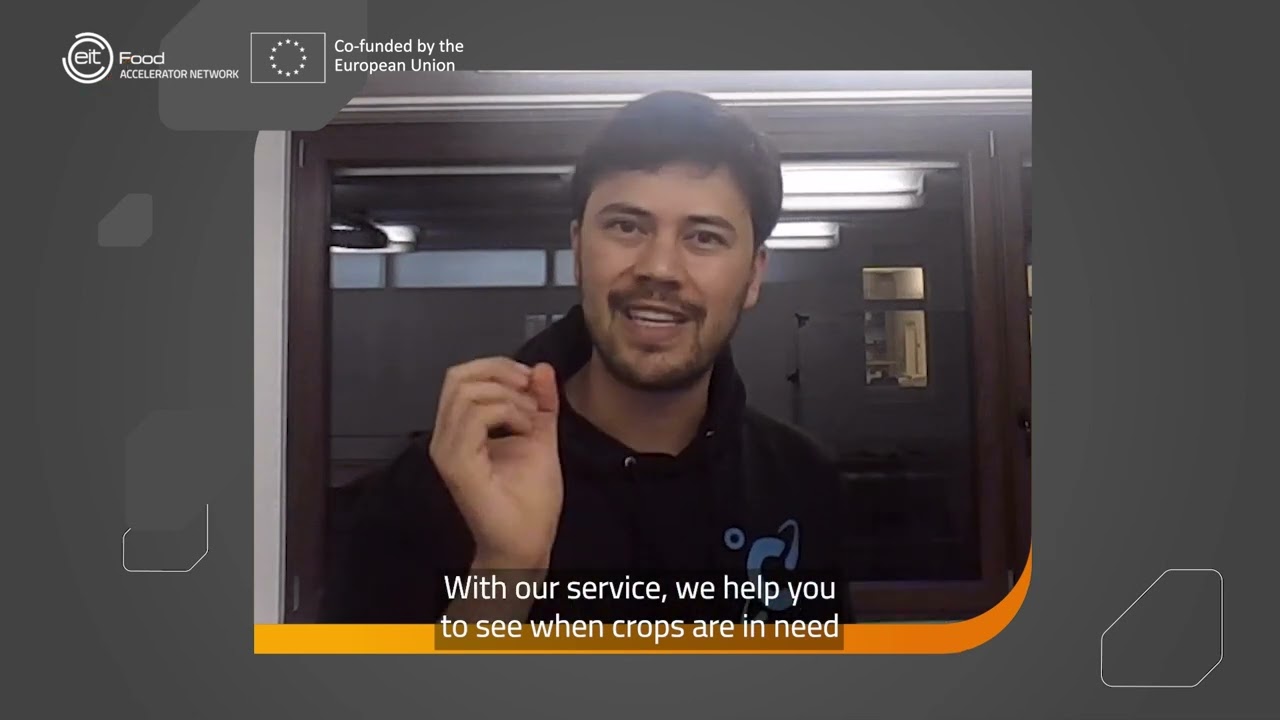
"Constellr’s approach to precise thermal imaging data is transforming how agriculture adapts to a changing climate. With early water stress detection, farmers can act before crop damage sets in, conserving water and protecting yields."
Beaming results back to earth
As Constellr’s work has moved from pilots into real-world use, one pattern keeps emerging: timing changes everything.
In many farming systems, water stress only becomes obvious when damage has already set in. By then, options are limited and losses are hard to reverse. What Constellr’s approach makes possible is a shift upstream, spotting risk early enough for farmers to act while there is still room to protect crops and make smarter trade-offs.
Farmers are already managing weather forecasts, water availability, energy costs, and labour constraints. Tools that complicate those decisions rarely stick. Constellr’s focus has been on clarity, turning complex thermal data into signals that are easy to trust and act on when it counts.
Water stress does not stop at farm boundaries. When irrigation becomes unpredictable, the effects ripple through supply chains, regional economies, and food availability. Improving water decisions at scale helps reduce volatility and strengthens resilience across the system, not just at the point of production.
The final frontier for water
As climate pressure increases, demand for reliable, real-time insight into crop stress will continue to grow. The potential impact of Constellr’s approach lies in scale. Expanded satellite coverage, broader integration with farm management systems, and adoption across water-stressed regions could significantly reduce systemic risk in food production.
What is needed now is continued investment in infrastructure, regulatory clarity around data use, and close collaboration with farmers and water authorities. With these conditions in place, space-based thermal data can become a standard tool for safeguarding food production under climate stress.
Learn about the latest opportunities, research and innovations shaping the food industry.
References
- FAO: Water at a Glance: The relationship between water, agriculture, food security and poverty
- Lakestar: Constellr tackling one of the world's biggest problems
- Spacewatch Global: Constellr Signs ESA ScaleUP INVEST Contract for Second Satellite
- Constellr: Constellr Launches Second Satellite, Strengthening Europe’s Sovereign Thermal Intelligence Capabilities
- EU-Startups: German space tech startup Constellr raises €10 million to protect the global food supply with water monitoring system


